How to Plan a First Multi-Day Hike in the Lake District
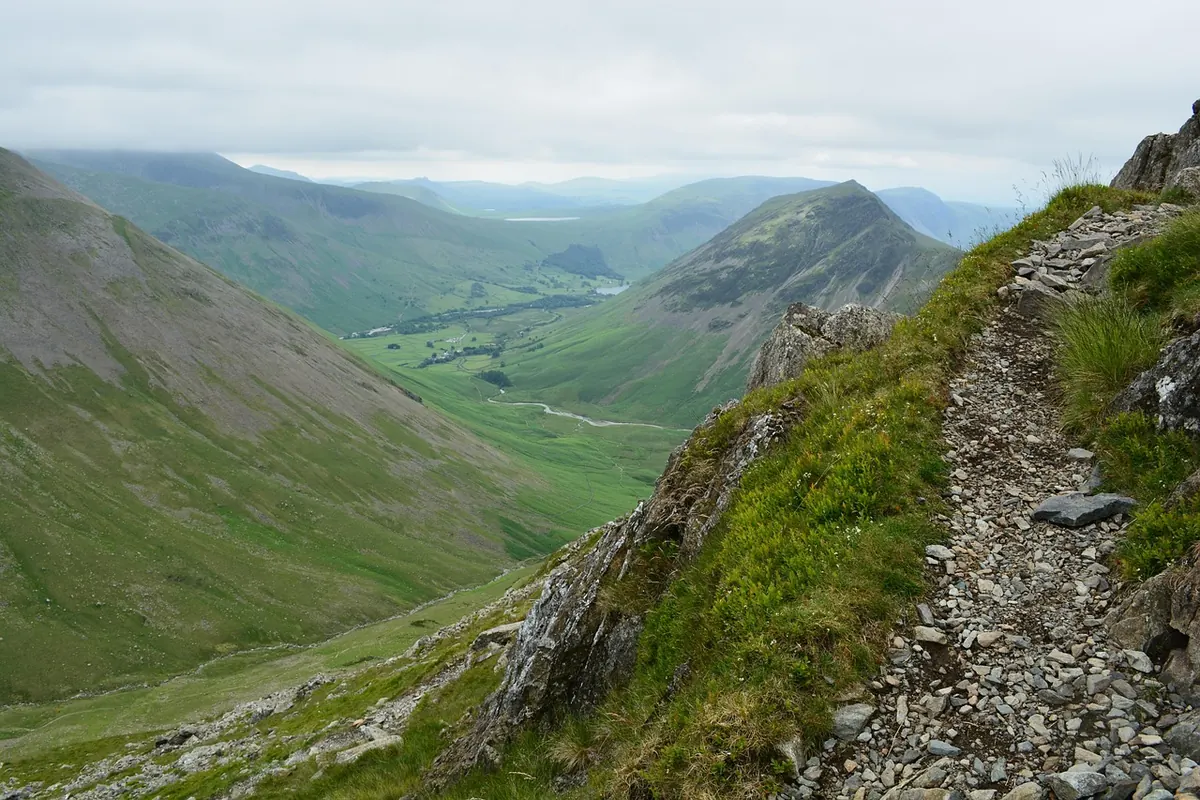
Three days on foot in the Lake District is long enough to feel like a proper journey and short enough to plan over a couple of evenings. It is also a place that punishes optimistic itineraries. Fells rise straight out of the valley floors, good paths turn to loose scree, and a route that looks tidy on the map can take two hours longer than you allowed. Get the fundamentals right — a sensible route, honest daily distances, beds booked, and a way out if the weather turns — and the rest tends to look after itself.
Choose a route that works as a loop
A circular route removes the single most annoying job in multi-day walking: working out how to get back to your car. In the Lakes, valleys radiate from the central fells like spokes, so a natural three-day plan is to cross one pass a day, sleep in a different valley each night, and return over a third pass to where you started.
Borrowdale, Langdale, Wasdale, Buttermere and Eskdale all make good anchors. A loop from Borrowdale over to Langdale and back through Eskdale is a classic shape, but it involves big climbs on tired legs and should not be your first attempt. Something gentler — say two nights in Borrowdale with day walks out to the surrounding fells, or a lower-level circuit of Buttermere and Ennerdale — will teach you far more about how you cope with consecutive days.
What to avoid first time round
Do not try to link Scafell Pike and Helvellyn in one trip. The valleys between them are long, the road connections are slow, and you will spend more time worrying about the clock than enjoying the walking. Save it for your third or fourth outing.
Set daily distances you can repeat three times
For a reasonably fit walker new to back-to-back days, 12 to 16 kilometres with 600 to 900 metres of ascent is a solid day. That figure surprises people who are used to longer lowland walks, so treat it as a ceiling rather than a target. Day two is when accumulated fatigue shows up, and day three is when small niggles become real problems.
Ascent matters more than distance
A rough planning rule is to allow an hour for every five kilometres of flat walking, plus an hour for every 300 metres of climbing, then add time for rough ground. A boulder field, a steep grassy descent or a boggy traverse can easily double your estimate. On a Lake District path, 15 kilometres with 800 metres of ascent is a full day out, not a morning's stroll.
Sort your beds before you finalise the route
Accommodation shapes the walk, not the other way round. There are Youth Hostels and independent bunkhouses in several of the main valleys, plus pubs with rooms, B&Bs and campsites. Book early for summer weekends and bank holidays, and check whether the place you fancy serves food in the evening or shuts its doors at a certain hour.
If you are thinking about wild camping
England and Wales have no general legal right to wild camp. In the Lake District it is tolerated in some areas of high, unenclosed fell, but not in valleys, enclosed fields, car parks or anywhere near buildings, and some landowners restrict it altogether. Rules change, so check the national park's current guidance and any landowner restrictions before you travel. If you do camp, arrive late, leave early, pitch on hard ground, light no fires, and carry out everything you brought in.
Plan resupply around the valleys
Keswick, Ambleside, Grasmere and Coniston all have shops where you can restock properly. Smaller villages often have a shop with limited opening hours and a limited range, and Sunday trading can be patchy out of season. Pubs will fill a water bottle and sell you a hot meal, but kitchen hours are usually earlier than you expect.
- Carry a day's food beyond what you think you need — shops close, and plans slip.
- Refill at village taps and cafés rather than relying on streams.
- If you take water from a fell stream, treat or filter it first, and avoid lowland water running through farmland.
- Keep cash and a card; small shops and rural pubs vary in what they accept.
Build in an escape route for every day
Every day's plan should include a point where you can drop into a valley and get out. Valley roads, villages and seasonal bus services link most of the main dales, so check timetables before you go rather than hoping for the best on a wet afternoon. Knowing that you can bail at a specific bridge at 3pm changes a miserable day into a manageable one.
Check the mountain weather forecast — the Met Office felltop conditions and the Mountain Weather Information Service are both worth reading the night before — and be honest about what you see. Turn around if the cloud is down, the wind is up, or you are moving slower than planned. Tell someone your route and expected finish time, and remember that phone signal is patchy. In an emergency, call 999, ask for the police, then ask for mountain rescue, and give a grid reference if you can.
Pack light and train on tired legs
For three days, lighter is almost always better. Aim to carry no more than you can comfortably lift above your head, and be ruthless with the extras. Broken-in boots, two pairs of walking socks and a waterproof jacket you actually trust matter more than anything else in the bag.
- Map and compass, plus a phone with offline maps as a backup and a power bank.
- Waterproof jacket and trousers, a warm mid-layer, hat and gloves, even in July.
- Headtorch, first aid kit, blister plasters, sun cream, insect repellent.
- Food for the day, a spare meal, and at least a litre of water capacity.
- Emergency shelter or bivvy bag, whistle, and a printed copy of your route and contacts.
The best preparation is a couple of long walks on consecutive days close to home, wearing the pack you intend to take. You will learn more about your feet, your pace and your appetite in one weekend than from any amount of planning.
Last checks before you set off
Confirm your accommodation, download the maps, check the forecast and bus times, and leave your plan with someone at home. Start each day early — Lakeland weather often deteriorates in the afternoon — and build in a short stop every couple of hours rather than pushing straight through. If you finish the three days tired but still enjoying it, you have planned it well. If you finish it exhausted and vowing never to repeat it, the days were too long.
Photo: BuyCustomThings / Pixabay
You Might Also Like
Gas, liquid fuel and alcohol stoves each shine in different conditions. We compare weight, fuel availability, cold-weather performance and cost for British camping trips.
Trekking poles spare your knees on descents and steady you on rough ground — but only with the right height, technique and a clear idea of when to leave them behind.